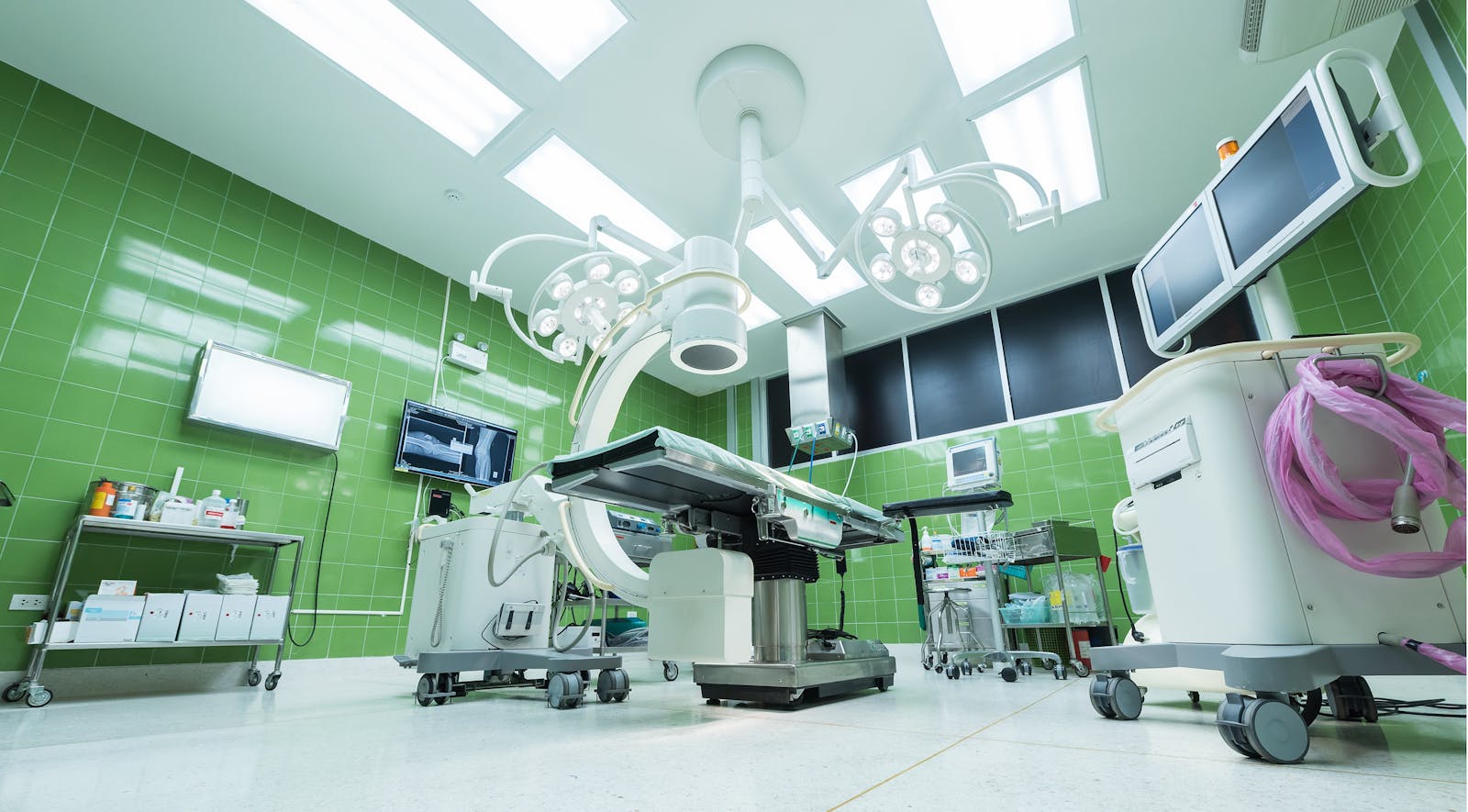
The short answer
Medical tourism means traveling to another country for medical or dental care. In Ecuador, dental and elective procedures are published at 55–70% below the equivalent all-in price in the United States, and the country uses the US dollar, so there is no currency risk. A fully restored tooth costs $1,000–$2,200 here against $3,000–$6,000 there.
Now the part almost no page tells you: nearly every published Ecuador price comes from someone selling the procedure — clinics, aggregators or lead-generation portals. This page cites each figure to its source, labels it when the publisher has a commercial interest, and where we could not find an Ecuadorian price we would stand behind, we say so instead of borrowing another country’s number.
Our role, stated plainly
The Clubbe is a travel agency. We organize the trip and connect you with medical centers and health professionals in Ecuador. That is all we do, and it matters that it is in writing before any figure:
- We are not a clinic, not medical professionals acting as such, not medical advisors and not a medical referral service.
- We do not rate, rank or guarantee the quality of any hospital, clinic, surgeon or dentist. Nothing on this page is a clinical recommendation.
- The medical care and the surgical procedure are directly between you and the provider: their quote, their informed consent, their contract and their professional liability.
- Prices on this page are indicative, drawn from dated public sources. Final cost requires clinical review. Always require a written, itemized, all-inclusive quote issued by the provider.
- Before you book we sign a services agreement that identifies the provider in writing and states this scope. If we were ever to receive a commission from a provider, we tell you in writing before you decide.
What we do bring: The Clubbe was founded by a dentist and a general surgeon. That does not make us your clinicians, and we do not opine on your case. It does mean we understand how a medical quote is built, what a credential actually means, and what to ask a specialist before you travel.
Dental prices: Ecuador vs the United States
Published ranges in US dollars, all-in where the source specifies it. Dentistry is the area where Ecuador has the most consistent data and the widest, most checkable gap.
| Procedure | Ecuador | United States |
|---|---|---|
| Single implant, fully restored (post + abutment + crown) | $1,000 – $2,200 | $3,000 – $6,000 |
| Zirconia crown | $200 – $600 | $1,000 – $2,500 |
| Porcelain veneer | $250 – $640 | $900 – $2,500 |
| All-on-4 / All-on-6 (per arch) | $4,000 – $14,000 | $20,000 – $35,000 |
| Full mouth (both arches) | $15,000 – $28,000 | $40,000 – $70,000 |
| Metal braces (full treatment) | $1,200 – $2,200 | — |
Ranges published by Ecuadorian clinics, industry aggregators and local price calculators (Cuenca, Quito and Guayaquil), consulted in July 2026 — all commercially interested sources. The US column uses independent averages where they exist. These are not quotes.
The two most common price traps
- The implant without the crown. The $800–$1,000 ads almost always cover only the post and abutment. The crown is billed separately ($200–$600). Setting that against a full US restoration is what manufactures those “79% savings”.
- The arch versus the mouth. All-on-4 and All-on-6 are priced per arch everywhere. Confirm in writing whether the quote covers one arch or both.
Surgery and cosmetic procedures
Ecuadorian data here is far weaker than in dentistry, and we say so up front: every row carries its caveat.
Knee replacement
$6,000 – $15,000 vs US average ~$32,570
Two industry sources disagree by ~40%, so we publish the full band. The US average has a real range of $14,188 to $49,016.
Rhinoplasty
$2,300 – $4,800
IVA-inclusive range per Ecuadorian price calculators, corroborated by a second local source. We found no comparable all-in US average.
Breast augmentation
$5,876 – $7,301
Depends on implant brand (Mentor vs Motiva). A price-calculator estimate, not a clinic tariff.
Lipoabdominoplasty
from ~$5,981
Same origin: an estimate published by an Ecuadorian price calculator in 2026, with no stated methodology.
Where we will not give you a number
We could not find published Ecuadorian prices we would stand behind for:
- CT and MRI scans
- Angioplasty and stents
- IVF
- Hospital executive health screenings
Rather than borrow a Mexican or Colombian price and put an Ecuadorian flag on it, we would rather tell you and help you request a written quote directly from the provider.
The tax rule almost every page gets wrong
0%
Health services
Zero-rated under Art. 56 of Ecuador’s Internal Tax Regime Law, still in force in 2026. A knee replacement, a cardiology consult, oncology treatment or disease-related dental work do not pay 15%.
15%
Cosmetic procedures
They carry the general rate, except when performed as a consequence of a proven illness or accident — reconstructive surgery returns to 0%. Ecuador’s general IVA rose from 13% to 15% on April 1, 2024.
Which makes a sentence circulating on English and Spanish pages simply false: “since the 2024 reform, private medical services in Ecuador pay 15% IVA.” They do not, and the difference can be hundreds of dollars on your budget. Ask the quote to state whether IVA is included and at which rate.
What about quality? What is actually documented
International accreditation
Hospital Metropolitano in Quito was the first hospital in Ecuador to earn Joint Commission International accreditation, in 2011, and publishes reaccreditations in 2014, 2017, 2020 and 2024. Verify current status directly with the accrediting body before you travel — accreditations expire.
Regional ranking
In IntelLat’s 2025 ranking of Latin American hospitals, Hospital Metropolitano in Quito places 17th of 80 (top quintile) and Omni Hospital in Guayaquil 57th. IntelLat is a private consultancy; the ranking is built on hospital-reported management metrics plus a reputation survey, and participation is voluntary — only two Ecuadorian hospitals appearing reflects who enrolled, not how many meet a bar.
What is not true
The Ministry of Health’s public-hospital accreditation program with Accreditation Canada International ran from 2013 to 2017 with no public record of renewals since, so it is not a current signal. Nor is it true that “Bloomberg ranks Ecuador in the top 20 for healthcare efficiency” — that figure circulates on marketing sites, not Bloomberg. And the country appears in neither the Medical Tourism Index nor the savings tables that do cover Mexico, Costa Rica and Colombia.
The honest read: Ecuador is not yet a recognized medical tourism destination the way Mexico, Colombia or Costa Rica are, and it is absent from the datasets that measure them. That is a genuine reason to do more homework. It is also why prices here have not been bid up by volume.
Quito, Guayaquil or Cuenca: altitude matters
City choice is one of the few decisions a trip planner genuinely can optimize with you, and almost no page in this sector addresses it.
Quito
~2,850 m above sea level
The country’s largest concentration of big, high-complexity private hospitals. Above the elevation at which the CDC recommends 3–5 days of acclimatization: if your procedure or an underlying condition is altitude-sensitive, discuss the city choice with your surgeon first.
Guayaquil
Sea level
No altitude variable, and the country’s busiest international connection. It is also where local press has documented an active foreign-patient market, with prices reported 40–70% below the United States or Europe.
Cuenca
~2,550 m above sea level
The country’s dental hub for foreign patients, with the largest expat community and the lowest dental prices of the three cities. Also above the CDC acclimatization threshold.
The CDC recommends 3–5 days of acclimatization above ~2,450 m and advises anyone with coronary artery disease, chronic lung disease, pre-existing hypoxemia or sleep apnea to consult a physician familiar with high-altitude medicine. No study exists of surgical outcomes at Quito’s specific altitude.
The risks, per the CDC
The CDC Yellow Book 2026 medical tourism chapter does not mention Ecuador: what follows is general guidance for anyone traveling for care, anywhere. We quote it rather than paraphrase it.
- Infection. The most common complications are infection-related: hepatitis B and C, HIV, bloodstream infections and surgical site infections.
- Antimicrobial resistance. Risk may be greater in certain countries or regions. If you had an overnight stay in a healthcare facility outside the US within the past 6 months, the CDC says you should be screened for carbapenem-resistant Enterobacterales when you present at a US hospital.
- Blood clots. Air travel and surgery independently increase the risk of deep vein thrombosis and pulmonary embolism.
- No-fly windows. 10 days after chest or abdominal surgery; 7–10 days after face, eyelid or nose procedures (CDC citing the American Society of Plastic Surgeons).
- Follow-up. Medical tourists may not receive adequate follow-up, raising the risk of postsurgical complications. Agree a complications plan with both your home clinician and the treating clinician before you travel.
- Records. The American College of Surgeons recommends obtaining a complete set of medical records before returning home so your own physicians have them immediately. Ask for them in English if that is your clinician’s language.
- Medication. Some drugs may be counterfeit or ineffective through expiration, contamination or improper storage.
An honest note on the 10-day window. The official guidance is prescriptive, but the evidence base is thinner than it implies: a 2025 meta-analysis of 24,975 patients found no statistically significant increase in combined surgery-plus-flight clot risk and recommended individualized assessment over a fixed waiting period. Follow the official guidance, and make the call with your surgeon — not with us.
Insurance: the part nobody explains properly
Medicare does not pay for care or supplies outside the United States, except in three emergency, proximity-based situations — none of which can be met from Ecuador. Part D likewise does not cover drugs bought abroad.
The foreign travel benefit in Medigap plans C, D, F, G, M and N covers 80% of billed charges after a $250 annual deductible, with a $50,000 lifetime cap, only if care begins in the first 60 days of the trip and only for emergencies. It pays $0 toward a planned procedure. Plans A, B, K and L carry no foreign benefit at all.
Travel medical policies are limited-benefit products. We do not claim they “exclude medical tourism” — we could not verify that exclusion in any plan document. What we will tell you: read the exclusions and get your insurer to confirm in writing whether care you traveled to receive is covered. Dedicated post-procedure complications insurance also exists; it applies only outside your country of residence and requires the facility to be duly licensed or accredited.
If something goes wrong: legal recourse
This is the uncomfortable part, which is why almost no page in this sector writes it. The American College of Surgeons warns that many of the means of legal recourse available in the United States are not universally available in other countries. In practice: suing a foreign provider in a US court usually fails for lack of personal jurisdiction; where a court does take the case it generally applies the law of the country where the procedure was performed, with that country’s damages rules; and any judgment must be enforced in the provider’s home jurisdiction, with local counsel and different limitation periods.
Which is why we insist on the earlier point: your care agreement is with the provider, and that is where it must be written down what is included, who operates, with what credentials, and what happens if there is a complication. We help you request those documents before you travel; we do not issue or back them.
How we work
You tell us what you need
The area of care, your possible dates and where you are traveling from. Don’t send us your medical records — we are not clinicians and we do not assess them.
We give you options, not a recommendation
We present unaffiliated providers with their published information and credentials so you can compare and choose. We do not rank or guarantee any of them.
You contract directly with the provider
The quote, the informed consent and the payment for the procedure are between you and the clinic or doctor. We do not collect on their behalf and we are not a party to that contract.
We build the trip around your appointment
Flights with margin before the procedure date and a flexible return, lodging near the medical center, transfers, a companion and an interpreter if needed.
We are with you on the ground
An advisor on direct contact while you are in Ecuador, for the logistics: flight changes, transfers, extra lodging if recovery runs long.
We have a network across every specialty, in Quito, Guayaquil and Cuenca. What you will never get from us is “this is the best surgeon in the country.” You will get options, verifiable credentials, and the right questions to ask each of them.
Considering coming to Ecuador for care?
Tell us the area of care and your possible dates. We come back with provider options and a realistic trip plan around your appointment, free and with no commitment. Please don’t send clinical information — we do not assess it.
Frequently asked questions
How much does a dental implant really cost in Ecuador — does it include the crown?
Most advertised prices ($800–$1,000) cover only the titanium post and abutment — the crown is billed separately. A fully restored single tooth (post + abutment + crown) is published at $1,000–$2,200 in Ecuador against roughly $3,000–$6,000 in the United States. Always ask what the quote includes.
Is All-on-4 priced per arch or for the whole mouth?
Per arch, everywhere in the world. It is the single most common source of a bill that ends up double what the patient expected — confirm in writing whether the quote covers one arch or both.
Does Ecuador’s 15% IVA apply to my procedure?
Health services are zero-rated for IVA under Art. 56 of Ecuador’s tax law. Cosmetic procedures do carry the general 15% rate, except when performed as a consequence of a proven illness or accident, which returns them to 0%. The common claim that “private medical care in Ecuador pays 15% since the 2024 reform” is simply wrong.
Quito, Guayaquil or Cuenca — does altitude matter?
Quito sits at ~2,850 m and Cuenca at ~2,550 m, both above the elevation at which the CDC recommends 3–5 days of acclimatization. Guayaquil is at sea level. No study exists of surgical outcomes at Quito’s specific altitude, so we will not quote you a risk figure — we will tell you it is a real variable your surgeon should weigh, and that city choice is one of the few things a trip planner genuinely can optimize.
How long should I stay, and when can I fly home?
The CDC says not to fly for 10 days after chest or abdominal surgery, and 7–10 days after face, eyelid or nose procedures (citing the American Society of Plastic Surgeons). The 5–14 day stay quoted across the industry is trade convention, not official guidance. Plan with a flexible return ticket.
Will my US insurance or Medicare cover any of this?
Medicare does not pay for care outside the United States except in three emergency, proximity-based situations, none of which can ever occur in Ecuador. The foreign travel benefit in Medigap plans C, D, F, G, M and N is emergency-only, with a $250 deductible and a $50,000 lifetime cap — it pays $0 toward a planned procedure. Travel medical policies are limited-benefit products: read the exclusions and confirm in writing with your insurer whether care you traveled to receive is covered.
Do doctors and nurses in Ecuador speak English?
No survey or registry documents English proficiency among Ecuadorian medical staff — anyone telling you “most doctors speak English” is guessing. Confirm language support in writing, for the surgeon and for nursing and discharge instructions. If your Spanish is not conversational, budget for an interpreter.
What happens if something goes wrong after I fly home?
The question almost nobody answers. The CDC warns that medical tourists may not receive adequate follow-up. Before traveling: agree a complications plan with both your home clinician and the treating clinician, require your complete medical records in English at discharge (an American College of Surgeons recommendation), and understand that US legal recourse is generally not available against a foreign provider. Dedicated complications insurance products exist — check whether they apply to your case.
How do I verify the doctor’s credentials and the hospital’s accreditation?
Ask for the specialist registration number and verify it in Ecuador’s public registry of health professionals. For international hospital accreditation, confirm it directly with the accrediting body rather than with the hospital — accreditations expire and are renewed. We help you request these documents, but the verification is between you and the provider.
Do you recommend a particular clinic or doctor?
No. We give you options from unaffiliated providers with each one’s published information, and you choose. We do not rate, rank or guarantee the quality of any hospital, clinic, surgeon or dentist. The care agreement is signed directly between you and the provider.
Sources
- CDC Yellow Book 2026 — Medical Tourism (Stoney & Leidel, 23 abr 2025)
- CDC Yellow Book 2026 — High Elevation Travel
- American College of Surgeons — Statement on Medical and Surgical Tourism (2009)
- Medicare — Coverage Outside the United States (CMS 11037, abr 2026)
- SRI Ecuador — Art. 56 LRTI, IVA sobre servicios (salud tarifa 0%)
- Hospital Metropolitano de Quito — historia institucional (acreditación JCI 2011 y reacreditaciones)
- IFC / Banco Mundial — Grupo Conclina Case Study (primera organización ecuatoriana acreditada por JCI)
- IntelLat — Ranking 2025 de hospitales de América Latina (PDF)
- MSP Ecuador — proceso de acreditación con Accreditation Canada International (2013–2017)
- El Universo — “cirugías de exportación”, mercado de pacientes extranjeros en Guayaquil (27 abr 2025)
- CuencaHighLife — costo real de implantes dentales en Ecuador (artículo escrito por la administradora de una clínica de Cuenca)
- Authority Dental — promedios de coronas dentales en EE. UU. (fuente independiente)
- CuantoMeCuesta EC — bandas de precios dentales y de cirugía estética con IVA (abr 2026)
- MedicalTourism.com — página de destino Ecuador (asociación del sector, sin fecha)
- Patients Beyond Borders — cifras globales del mercado y ahorros por país (Ecuador no aparece en la tabla)
Legal notice
This article is informational and does not constitute medical, legal or tax advice. The Clubbe is a travel agency: it organizes trips and connects travelers with medical centers and health professionals in Ecuador. We are not a healthcare provider, we do not diagnose, we do not recommend treatments, and we do not guarantee, rate or rank any hospital, clinic, surgeon or dentist. Medical care and any surgical procedure are contracted and performed directly between the patient and the provider, under the provider’s professional responsibility. Prices shown are approximate, are drawn from cited and dated public sources, are offered as general guidance only and are not a quote; final cost requires clinical review by the provider. Before any booking, a services agreement is signed that identifies the provider and defines this scope. Prices and sources reviewed July 2026.